
Every young person develops valuable skills throughout their lives.
Whether it is balancing study with caring responsibilities, captaining a sports team, volunteering in their community, organising events, or completing coursework projects, young people gain capabilities that employers consistently tell us matter in the workplace.
Yet too often these skills go unrecognised.
When I speak to young people, they tell me that they struggle to explain how their experiences demonstrate skills that are relevant to work, while employers can find it difficult to identify potential in candidates who have limited employment history. To help bridge that gap, Skills England is today publishing the Employability Skills Framework.
The framework builds on Skills England’s Standard Skills Classification and other skills frameworks including Skills Builder and the Essential Digital Skills Framework.
It is available for everyone to use. We will continue to evolve it through further engagement to understand the needs to employers, young people, Strategic Authorities, providers and other stakeholders.
Creating a shared language for employability
We have identified 13 key employability skills:
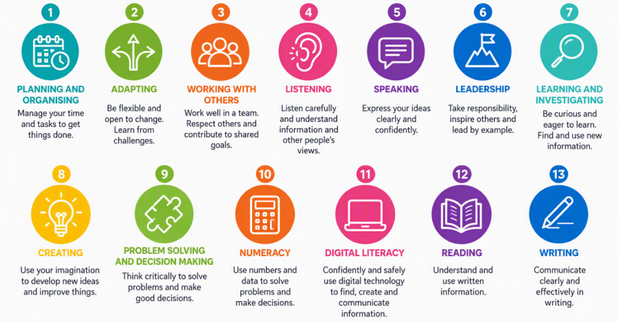
For each skill, the Employability Skills Framework shows:
- what the skill practically means at the start of a career;
- examples of how a young person may have developed it through education or everyday experiences;
- what employers can look for during recruitment and how employers can support further development in the workplace; and
- what the skills mean in an AI enabled workplace.
Using technology
The world of work is changing rapidly.
As digital technologies become increasingly important across sectors, young people need the confidence to use technology effectively while applying critical thinking and judgement. That is why digital literacy and AI-enabled capabilities are embedded throughout the framework. The focus is not simply on using technology, but on using it responsibly, evaluating outputs and maintaining human oversight.
This reflects what employers are increasingly telling us they need: individuals who can combine technical capability with communication, teamwork, adaptability and sound judgement.
How the framework supports young people
The skills listed above can be demonstrated through activities that young people are already doing.
For example:
- Sports team: Teamwork, leadership, adapting
- Caring for family: Planning, communication, responsibility
- Volunteering: Leadership, problem solving, teamwork
- School project: Planning, communication, digital skills
- Part-time job: Organisation, teamwork, professionalism
- Clubs and hobbies: Creativity, leadership, learning
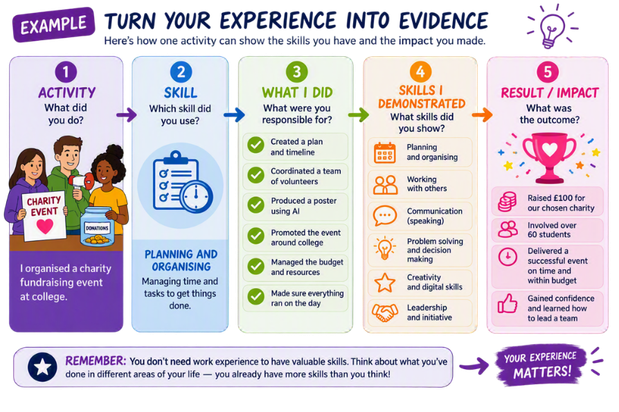
The below helps to demonstrate how young people can turn this experience into evidence.
How the framework supports employers
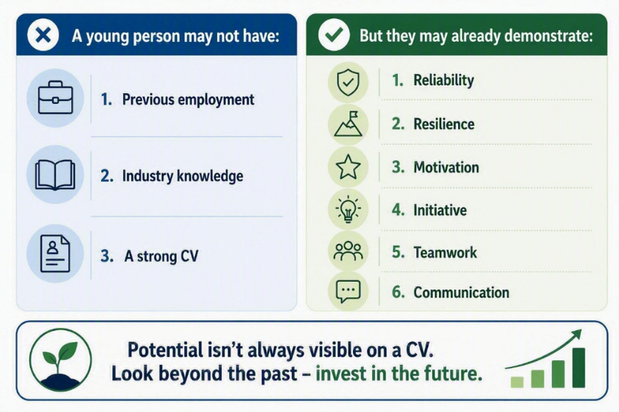
The employers I speak to are passionate about creating opportunities for young people. Their advice is often that the best approach is not to ask young people to share their previous work experience, but instead to ask them about challenges they have overcome, times they’ve worked with others or organised things.
This helps young people to make that connection with the skills they have, which they may not yet be ready to express in the way we as employers are used to hearing.
Looking ahead
This publication represents an important step in Skills England's wider work to improve outcomes for young people and support employers to access the talent they need.
The framework has been developed with the support of the King's Trust, St Martin's Group, Youth Futures Foundation, and the North West Business Leaders Team.
Ultimately, our goal is simple: to help every young person recognise the value of the skills they already possess and to ensure employers can identify, recruit and develop potential wherever it is found.
Because opportunity should not depend on whether you have had a job before. It should depend on what you are capable of achieving.